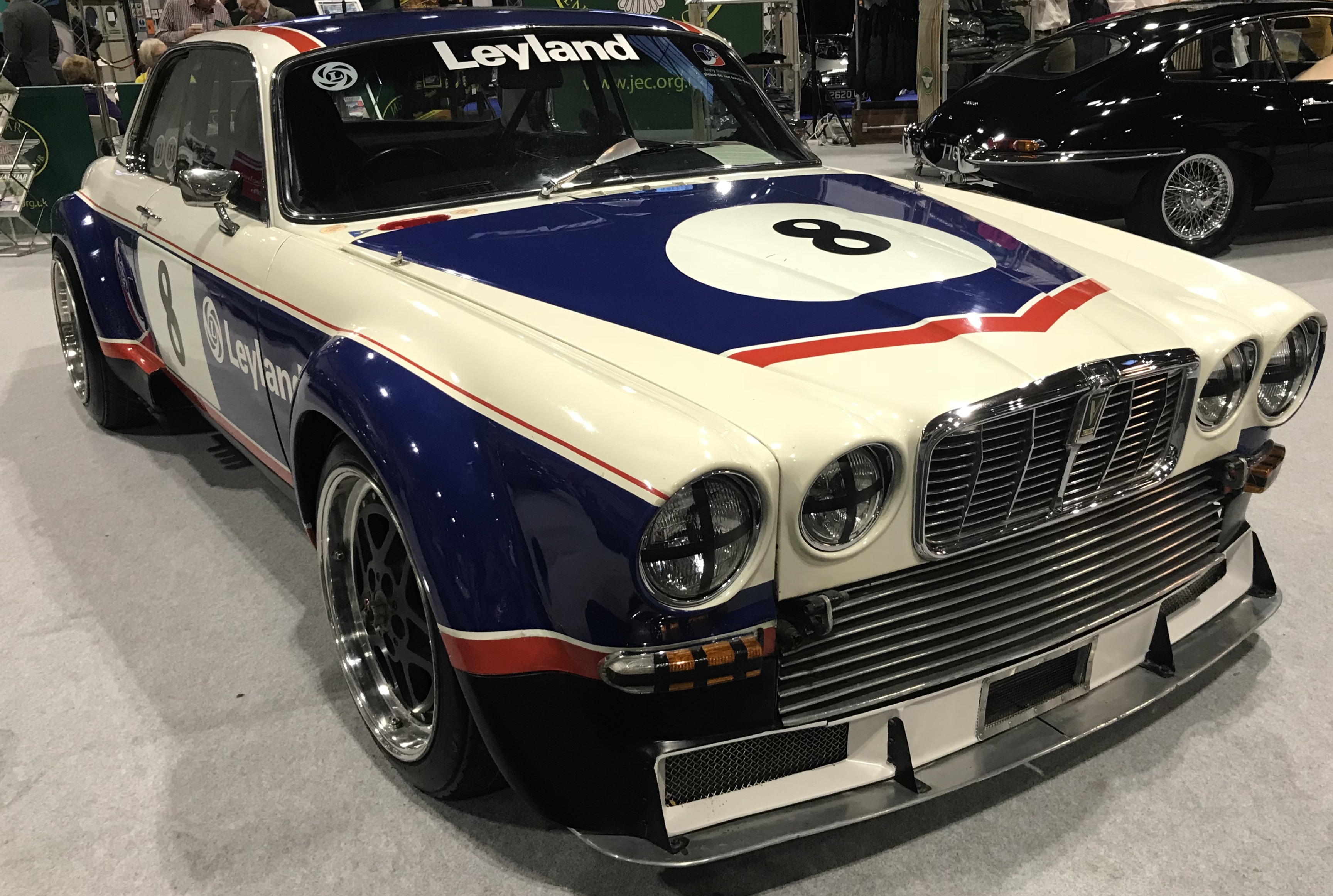
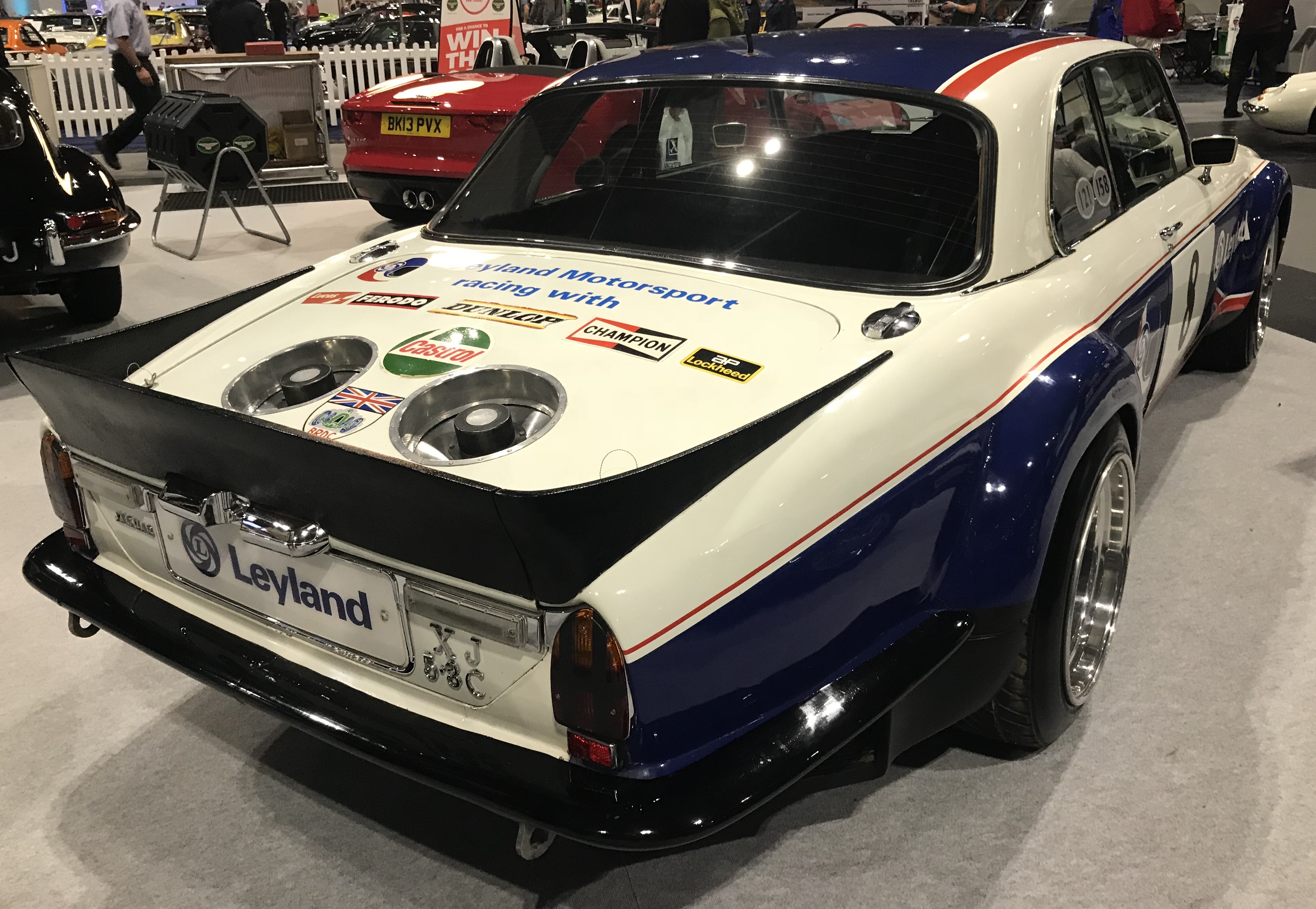
The Broadspeed Programme
In 1976, Ralph Broad prepared a series of Jaguar XJ12C coupés for the European Touring Car Championship under Appendix J Group 2 regulations. The programme marked Jaguar’s return to international touring car competition, aiming to challenge established rivals such as BMW and Ford.
The first XJ12C shell was delivered to Broadspeed in September 1975, and by early 1976 the car had been developed into full competition specification. From the outset, the cars demonstrated considerable pace, particularly in qualifying. However, the programme would become defined by persistent reliability issues, many of which stemmed from the car’s weight and the stresses placed on its mechanical components.
Development and Early Races
The Broadspeed XJ12C made its debut at Silverstone in March 1976. It immediately showed its potential by securing pole position, highlighting both the effectiveness of the chassis and the performance of the V12 engine. Despite this, the car retired from the race, setting a pattern that would continue throughout much of the programme.
Further races during the 1976 season reinforced this contrast. The cars were consistently fast over a single lap but struggled to complete race distances. Failures involving drivetrain components, cooling systems, and general durability prevented the team from converting speed into results.
Over the winter of 1976–1977, development continued in an effort to address these issues. While some improvements were made, reliability remained a significant challenge heading into the 1977 season.
The 1977 Season
The 1977 season began with renewed optimism, but early races at Monza and the Salzburgring again ended in retirement despite competitive pace.
At Brno, the programme achieved a breakthrough, with one of the cars completing a full race distance. Although not a leading result, it marked progress in improving durability.
The Nürburgring 6 Hours provided one of the clearest demonstrations of the car’s potential. The XJ12C recorded the fastest lap of the race, confirming its outright pace against established competition. However, mechanical failure once again prevented a representative result.
Later in the season at Silverstone, the cars qualified strongly and ran competitively in the early stages, but reliability issues continued to limit results.
Performance Summary
In outright terms, the Broadspeed XJ12C was one of the fastest cars in the European Touring Car Championship during its period of competition. It regularly achieved strong grid positions and, on occasion, led races or set fastest laps.
However, this performance was offset by issues of weight, mechanical complexity, and durability. As a result, the cars rarely translated their pace into consistent finishes.
Race Results
The table below summarises the known race entries and results for the Broadspeed XJ12C programme during 1976 and 1977.
| Date | Location | Entrant No. | Qualifying Position | Race Position | Drivers | Additional info |
|---|---|---|---|---|---|---|
| 19th September 1976 | Access RAC Tourist Trophy Silverstone | 1 | 1 | DNF | Derek Bell, David Hobbs, Andy Rouse | Fastest Lap. Lost a wheel on lap 39 |
| 27th March 1977 | Autodromo Nazionale di Monza | 1 | 1 | DNF | John Fitzpatrick, Tim Schenken | Two engines lost in practice to oil surge. Retired lap 25 due to oil pressure |
| 27th March 1977 | Autodromo Nazionale di Monza | 2 | - | DNS | Derek Bell, Andy Rouse | Oil pressure caused failure to start |
| 24th April 1977 | Austria-Trophae Salburgring | 1 | 4 | DNF | John Fitzpatrick, Tim Schenken | Fastest lap. Wheel flange failure lap 10 |
| 24th April 1977 | Austria-Trophae Salburgring | 2 | 1 | DNF | Derek Bell, Andy Rouse | Holed radiator. Wheel flange failure lap 20 |
| 5th June 1977 | Masaryk-Ring, Brno | 6 | 1 | DNF | Derek Bell, Andy Rouse | Gearbox |
| 5th June 1977 | Masaryk-Ring, Brno | 7 | 2 | 16 | John Fitzpatrick, Tim Schenken | Fastest lap. 3rd in class. Tyre exploded lap 45 |
| 10th July 1977 | Nurburgring Nordschleife | 2 | 1 | DNF | John Fitzpatrick, Tim Schenken | Fastest lap. Oil pressure lap 1 |
| 10th July 1977 | Nurburgring Nordschleife | 3 | 5 | 2 | Derek Bell, Andy Rouse | |
| 7th August 1977 | Zandvoort | 5 | 5 | DNF | John Fitzpatrick, Tim Schenken | lap 41 |
| 7th August 1977 | Zandvoort | 6 | 3 | DNF | Derek Bell, Andy Rouse | differential lap 92 |
| 18th September 1977 | Access RAC Tourist Trophy Silverstone | 1 | 1 | 4 | Derek Bell, Andy Rouse | Accident lap 98 |
| 18th September 1977 | Access RAC Tourist Trophy Silverstone | 2 | 2 | DNF | John Fitzpatrick, Tim Schenken | Front hub |
| 25th September 1977 | EG Trophy Zolder | 8 | 3 | DNF | Derek Bell, Andy Rouse | Gearbox |
| 25th September 1977 | EG Trophy Zolder | 9 | 2 | DNF | John Fitzpatrick, Tim Schenken | Valve |
Chassis and Surviving Cars
A limited number of XJ12C shells were prepared by Broadspeed to full Group 2 specification. All have survived, although one of them should not.
| Chassis No. | Details |
|---|---|
| BELJC001 | Currently owned by Chris Scragg who campaigns it having had modifications carried out by M&C Wilkinson |
| BELJC002 | Car built up by Bob Kerr after purchasing for £750 from a scrapyard near Coventry |
| BELJC003 | Part of the Jaguar Daimler Heritage Trust Collection |
| BELJC004 | Only car fitted with the dry sump engine. Fitzpatrick/Schenken car. Was sold from the JDHT collection in 1997 |
Legacy
Although the Broadspeed programme did not achieve major championship success, it represents a significant chapter in Jaguar’s motorsport history. The cars combined striking design with formidable straight-line performance and remain highly recognisable today.
Surviving examples continue to appear at historic racing events, where they serve as a reminder of a programme that demonstrated considerable promise but was ultimately constrained by reliability.